By Aloha Mhae Masbate and Matthew Tirona, Cofense Phishing Defense Center
Black Friday is one of the most anticipated shopping events worldwide, falling on the fourth Friday of November, following Thanksgiving Day in the United States. It is widely known for huge discounts and special promotions, online and in-store deals, and early holiday shopping opportunities. Despite the excitement surrounding the Black Friday promotions, the event also creates an opportunity for cybercriminals to take advantage of the surge in online shopping and target unsuspecting consumers and businesses.
The Cofense Phishing Defense Center (PDC) has observed a Black Friday-themed Phishing campaign targeting consumers with fake promotional offers. This campaign aims to deceive users by exploiting the device authentication process through generated login codes to grant threat actors unauthorized access to their Microsoft accounts.
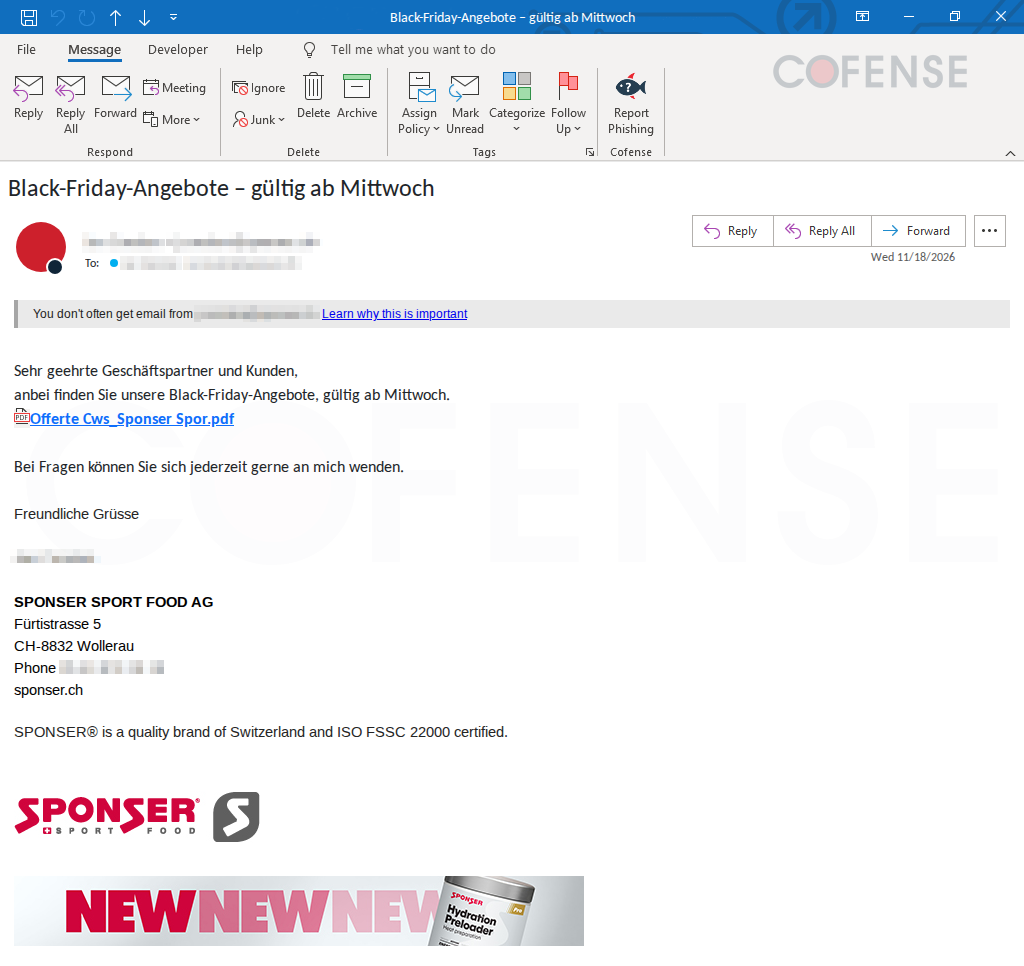
Figure 1: Email Body
Figure 1 illustrates an email with the subject "Black-Friday-Angebote – gültig ab Mittwoch" (Black Friday deals – valid from Wednesday). The email informs business partners and customers about Black Friday offers, which are valid starting Wednesday. It references a pdf attachment and encourages recipients to visit the link (hXXps://lp[.]constantcontactpages[.]com/cu/We6jN0q) for further information about the offer.
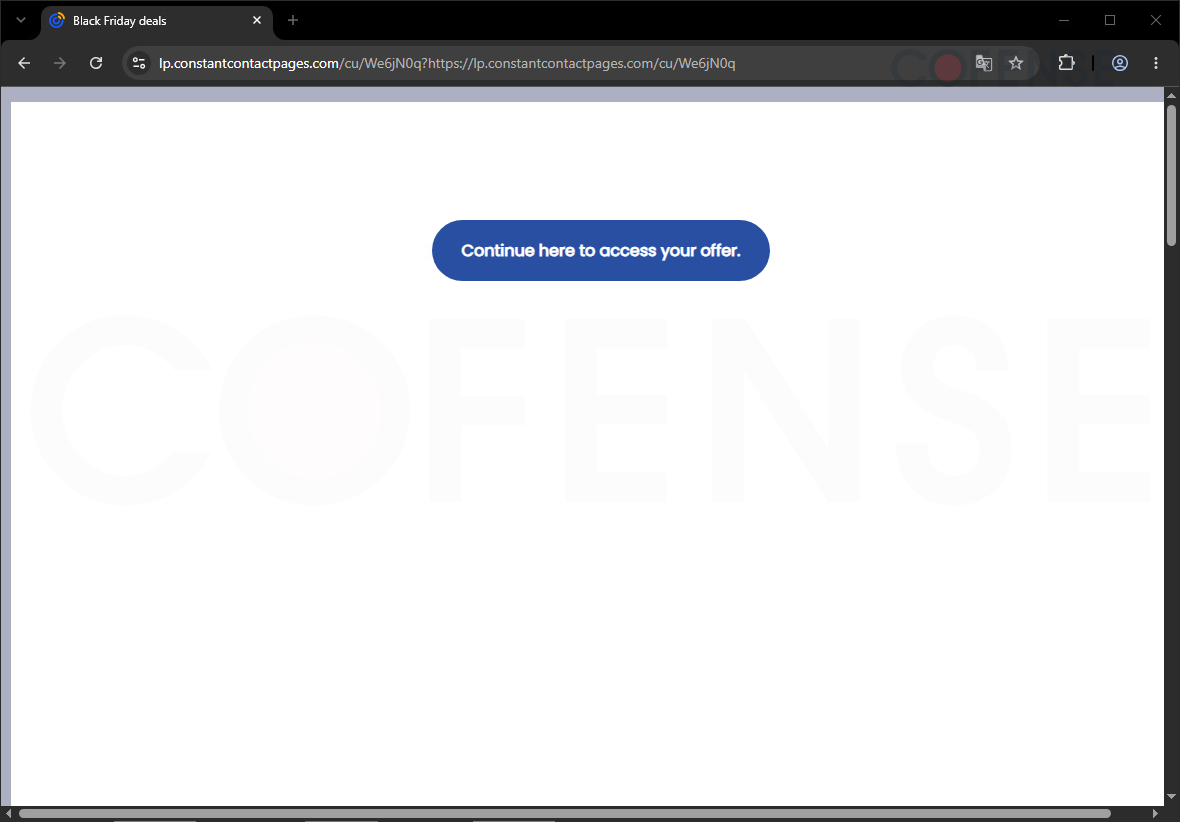
Figure 2: Initial Offer Page
Figure 2 shows the redirected page that loads after the victim clicks the embedded URL in the email. This is the first page the user lands on and is hosted by Constant Contact, displaying a generic button, “Continue here to access your offer," which may encourage users to continue with the phish . The absence of promotional details or merchant information is an indicator that the promotion is malicious.
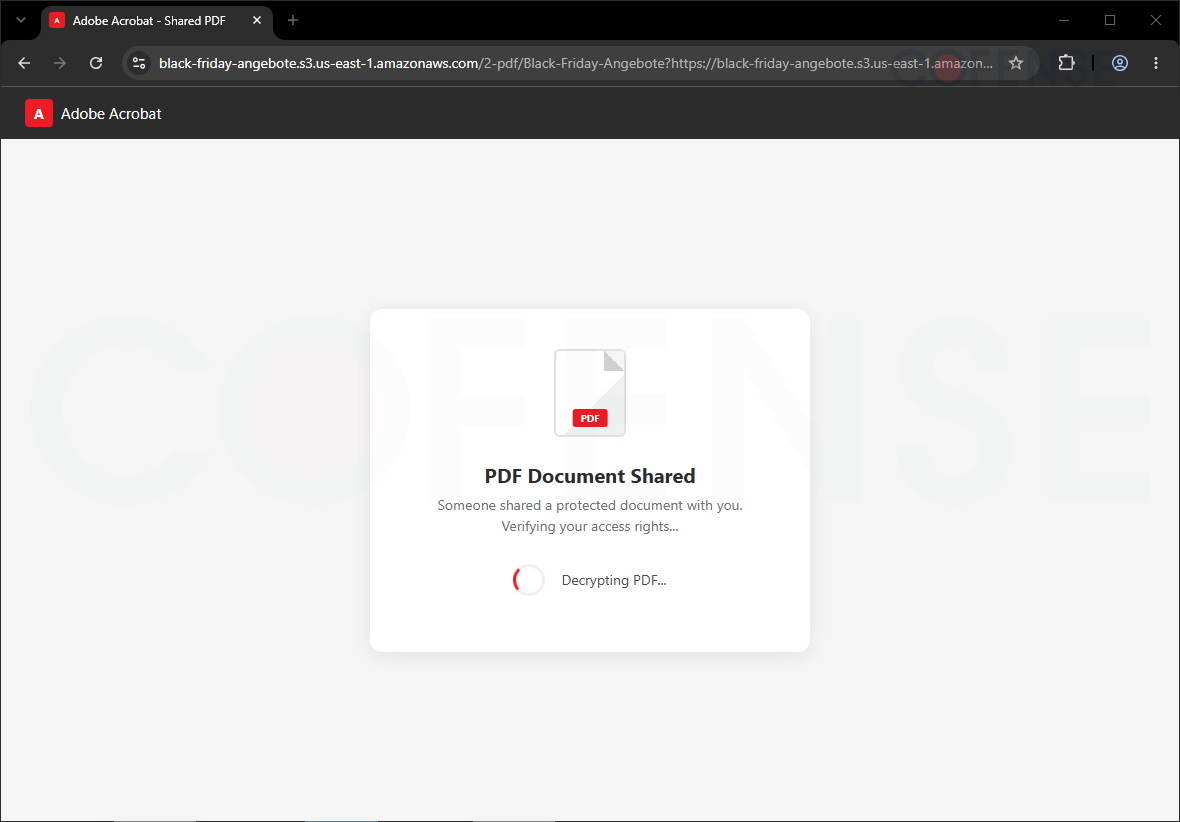
Figure 3: Fake Document Decryption Process
Once the victim clicks the button, the user it taken to another redirected page impersonating Adobe Acrobat, as seen in Figure 3. The page displays a fake loading animation to convince the victim that the intended file is a protected document and is currently undergoing decryption. A closer inspection of the URL (hXXps://black-friday-angebote[.]s3[.]us-east-1[.]amazonaws[.]com/2-pdf/Black-Friday-Angebote), indicates that the domain is not related to Adobe and serves as a potential red flag regarding the webpage's legitimacy. The page uses a confusing Amazon AWS subdomain containing a concatenated path rather than an official Adobe domain.
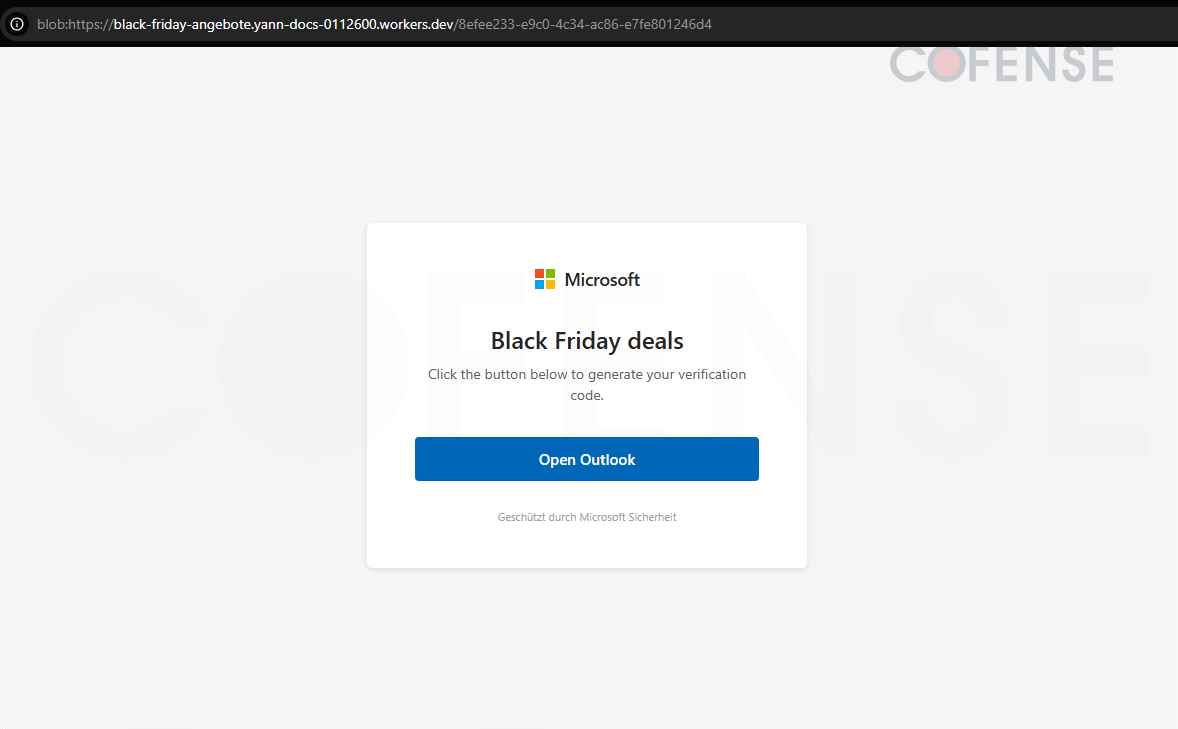
Figure 4: Initial Stage of Identity Verification
Figure 4 depicts the redirected Microsoft phishing page hosted by a non-Microsoft domain (hXXps://black-friday-angebote[.]yann-docs-0112600[.]workers[.]dev). The domain “workers[.]dev” is a legitimate cloud-hosting service provided by Cloudflare that can be abused by threat actors to host phishing websites.
The page displays a “Black Friday deals” message and prompts users to click the button to generate a verification code. This unusual verification process is a red flag because the promotion has no legitimate reason to require Microsoft verification.
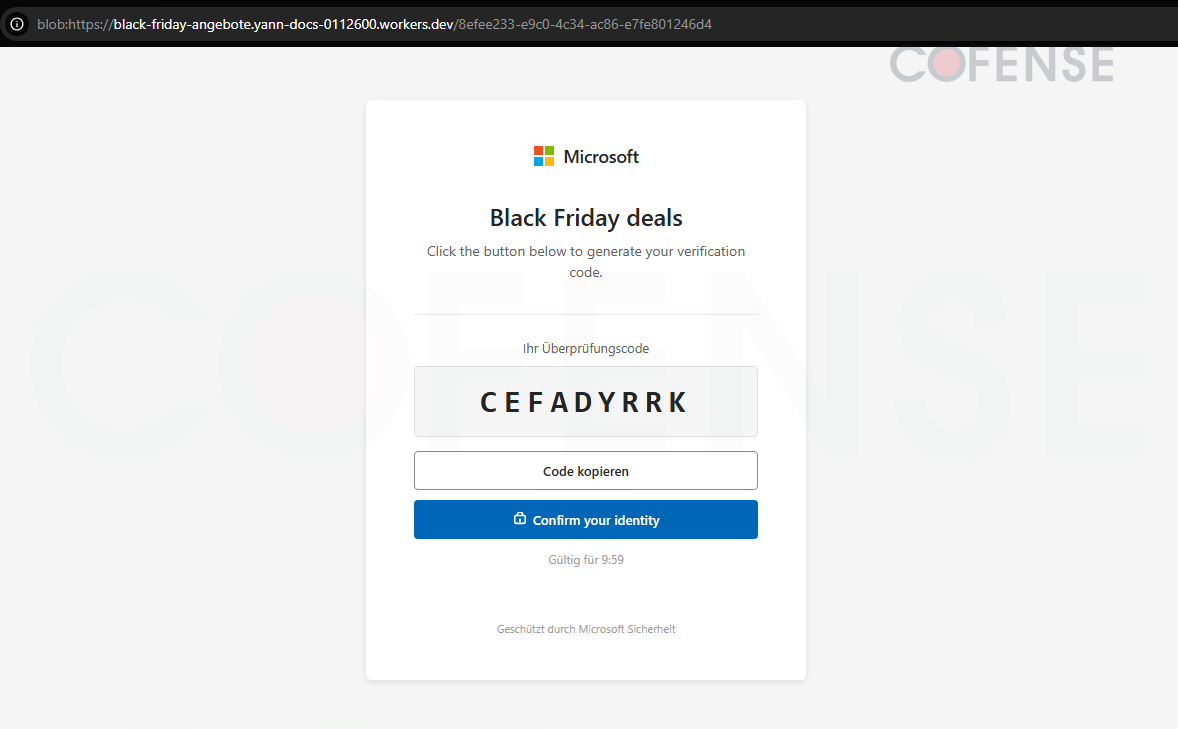
Figure 5: Verification Code Generation Process
Figure 5 illustrates how the victim generates a unique verification code and selects the "Code kopieren" (Copy Code) button to copy it to the clipboard. The copied code is then ready to be submitted for identity confirmation.
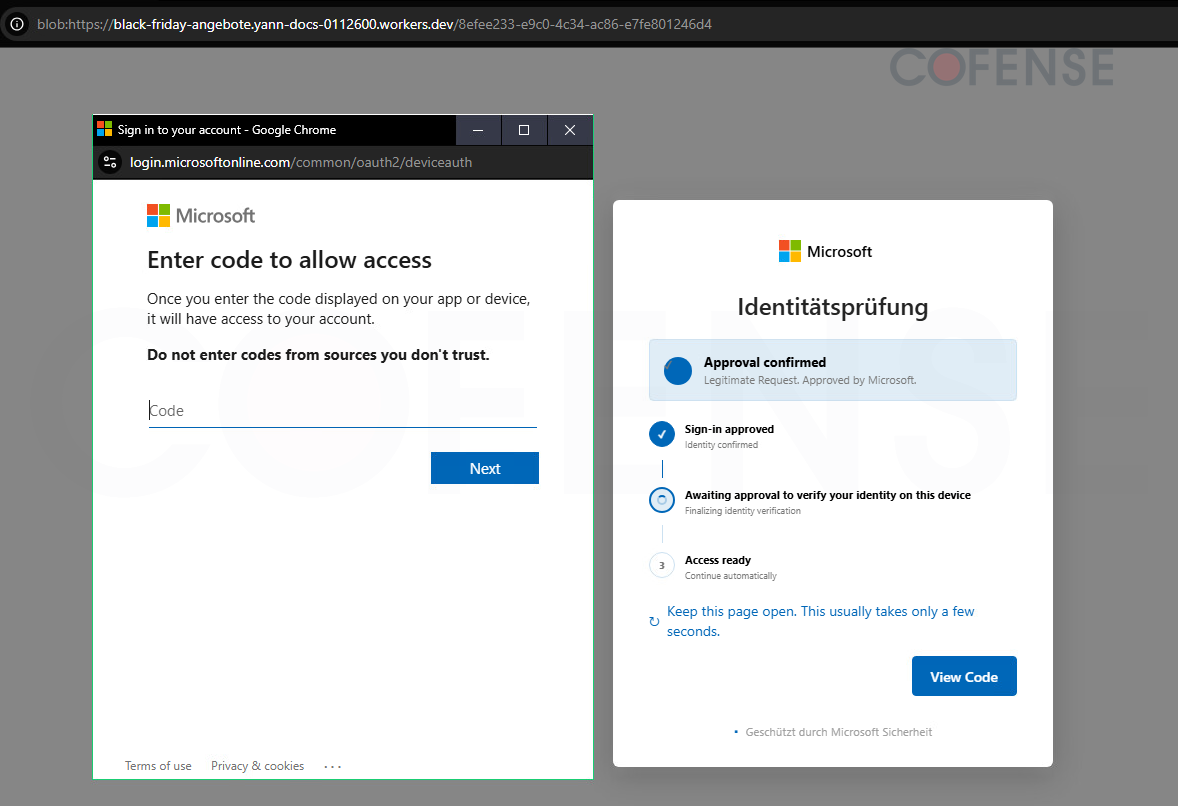
Figure 6: Final Step of Identity Verification
Proceeding with the confirmation, Figure 6 shows the last identity verification process prompting the victim to paste the previously generated verification code to access the intended file. While the process appears to be a legitimate security measure, it is designed to deceive the victim into submitting the code, potentially enabling the threat actor to obtain unauthorized access to the victim's account.
Overall, this campaign shows how threat actors exploit the upcoming Black Friday deals to lure users into interacting with malicious links and deceptive verification processes. This highlights a few important things which users should be doing when interacting with these types of promotional emails. They should: remain alert, confirm the authenticity of online promotions by checking their legitimate websites first, and practice caution when interacting with unfamiliar links or websites.
While employee awareness remains important, organizations need additional layers of defense to identify and stop threats that bypass traditional email security controls. Cofense combines AI-driven detection, human-vetted threat intelligence, and rapid remediation to help organizations identify and respond to these threats before they cause harm. Learn how Cofense Phishing Remediation can strengthen your organization's phishing defenses.
Email(s) IOCs:
Stage 1 - Observed Email Infection URL: | Infection URL IP(s): |
hXXps://lp[.]constantcontactpages[.]com/cu/We6jN0q | 172.64.155.130 |
Stage 2 – Observed Payload URL(s): | Payload IP(s): |
hXXps://black-friday-angebote[.]s3[.]us-east-1[.]amazonaws[.]com/2-pdf/Black-Friday-Angebote?hXXps://black-friday-angebote[.]s3[.]us-east-1[.]amazonaws[.]com/2-pdf/Black-Friday-Angebote | 16.182.18.122 |
hXXps://black-friday-angebote[.]yann-docs-0112600[.]workers[.]dev/40b200f2-dcf1-423d-8a6b-cd2fa31fcdb0 | 172.67.212.84 |
All third-party trademarks referenced by Cofense whether in logo form, name form or product form, or otherwise, remain the property of their respective holders, and use of these trademarks in no way indicates any relationship between Cofense and the holders of the trademarks. Any observations contained in this blog regarding circumvention of end point protections are based on observations at a point in time based on a specific set of system configurations. Subsequent updates or different configurations may be effective at stopping these or similar threats. Past performance is not indicative of future results.
The Cofense® and PhishMe® names and logos, as well as any other Cofense product or service names or logos displayed on this blog are registered trademarks or trademarks of Cofense Inc.