By: Jacob Malimban, Intelligence Team
Cofense Intelligence has identified an active phishing campaign exploiting confusion surrounding the Microsoft November 2026 outage to deliver a credential phishing attack. The email, supposedly from Microsoft and personalized using the recipient’s organization, claims that emails are unavailable due to disruptions to Exchange Online. The recipient is instructed to click the button to “Restore Messages”. Clicking on the button, however, redirects the user to a Microsoft 365-spoofing credential phishing page.
Threat actors move quickly on big news. The first sample was seen one day into the outage. By combining the recent outage news with their phishing attacks and likely with generative AI, the threat actors have quickly created an ongoing and likely effective campaign. After this outage, people expect email problems, so a message about stuck emails matches what they already expect, and they may check emails less carefully.
Email Content
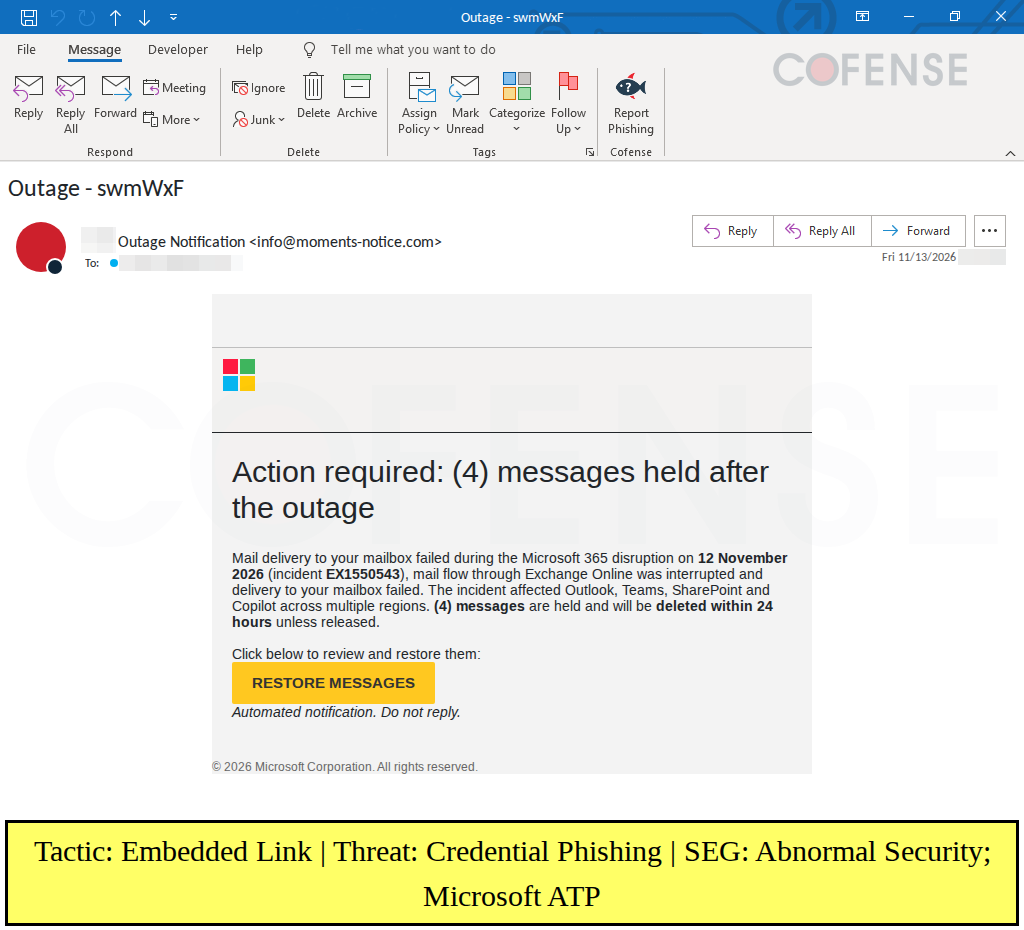
Figure 1: Held message notification used in credential phishing. (ATR 426633)
This campaign email sends a fake held message notification with a button leading to a credential phishing site. The email, as shown in Figure 1, is styled like a legitimate Microsoft notification. The email appears to come from the organization’s “Outage Notification” based on the email recipient’s company. Recipients are informed that “messages are held and will be deleted within 24 hours unless released”, because threat actors use urgency to get victims to act. Clicking on the button in the email to “RESTORE MESSAGES” will redirect the email recipient to a Microsoft 365 credential phishing site instead.
Microsoft-Spoofing Sign-In Page
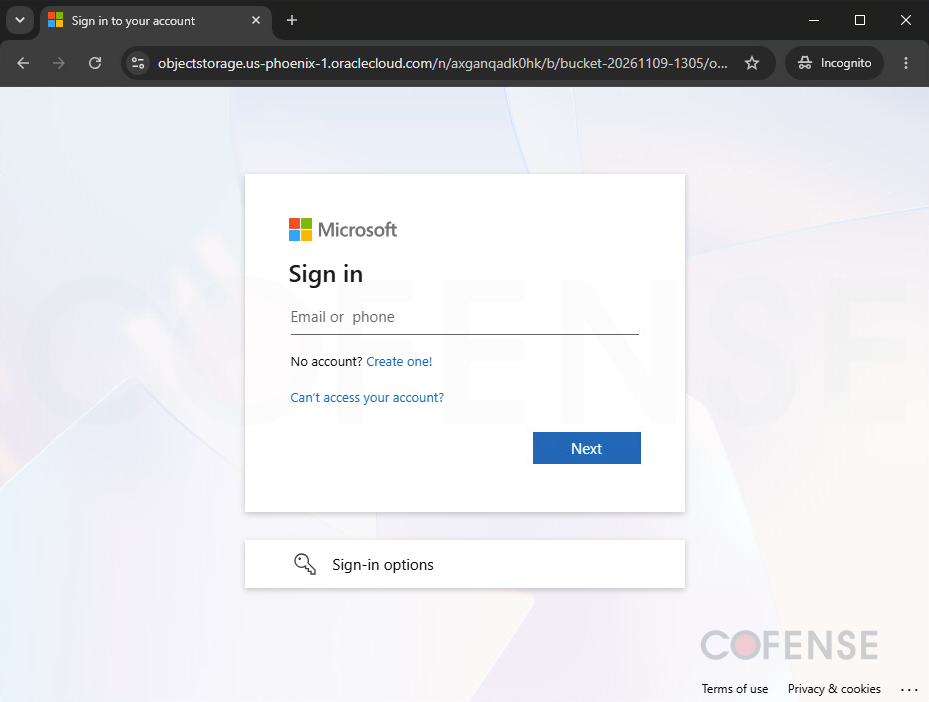
Figure 2: Microsoft credential phishing page used in campaign. (ATR 426633)
In prior campaigns, threat actors were already good at creating realistic login pages. As seen in Figure 2, the Microsoft credential phishing page used in this campaign is a good mimicry of the real Microsoft login page.
When a victim first submits credentials, the phishing page will say that the credentials are incorrect. If they try a second time, the page will redirect to Microsoft to obfuscate the fact that they were on a phishing page. Although this type of phishing lure has been used before, threat actors are combining it with breaking news regarding the outage to create a dangerous attack.
Cofense Intelligence provides early warning of emerging phishing campaigns through Flash Alerts like this one, giving security teams advance notice of new tactics, techniques, and procedures (TTPs) before they reach more inboxes. In this case, the campaign bypassed Abnormal Security, Mimecast, and Microsoft ATP. Despite the bypass of email security controls, employees trained using Cofense’s Security Awareness Training (SAT) were able to identify the phishing campaign emails like those found in ATR 426633.
Indicators of Compromise
Table 1: Sample IOCs in this campaign.
ATR | Indicator of Compromise (IoC) |
426633 | hxxps[://]u113727626[.]ct[.]sendgrid[.]net/ls/click?upn=u001[.]p6ehk-2BB718ZETNiZNGuxo3j1P0MVD3rdvOVI9sP-2BnPsLzlJ1kC0BGXSrA87FxGV2Tnsq_96ijWxyw2QhPoDszBH5r8uFrkpMdds2hZIWoYU12UFM0KmXhzX0rj-2FxyFcYINxbp9rSw7Gb5QdD8oEJaioSfGCmyeDiuuOlmPJ116OhpznfdyxrHNHFfsh1apj8s5KSN-2FySIYfZUmzPcKVs3t7AgkIP5gJ-2B1oZzxBsRObsGCq12EeX8StojlenAPzNLWTLvWdvEJTpbDRcMNhoMnwRpF1g-3D-3D |
426633 | hxxps[://]u113727626[.]ct[.]sendgrid[.]net/ls/click?upn=u001[.]p6ehk-2BB718ZETNiZNGuxo3j1P0MVD3rdvOVI9sP-2BnPsLzlJ1kC0BGXSrA87FxGV2LBuH_Rk2LDnblG5xWVF2dT3dh-2FberWpp4-2BOacrlV2EMJReNe6pMTzZfjko6erW4fp5o1eRQSOnf2DJcgH-2B9JX5vwL93T3DQxstmVXwYg0HSc-2FwFD4KGDM1Zb1EDgHenaXB64YI8Dh4N3n7QIeXGLIbBsGXkVs3s4MVnZU9lrOzqdn0DFEztdcUma4FQxIKjX5Z8hJPH16Bzm8y3Tspl-2F4Eo3ddQ-3D-3D |
426633 | hxxps[://]reallifeaccounting[.]com/ |
426633 | hxxps[://]objectstorage[.]us-phoenix-1[.]oraclecloud[.]com/n/axganqadk0hk/b/bucket-20261109-1305/o/index1880353[.]htm |