By: Marie Mamaril, Intelligence Team
Finance-themed phishing is moving toward process-oriented messaging. Subject lines increasingly use ordinary business language instead of overt pressure, allowing malicious emails to resemble invoices, remittance notices, procurement requests, contract revisions, and vendor follow-ups.
That evolution creates detection challenges for both users and email-security technologies. Many awareness programs were built around obvious pressure words such as “urgent,” “immediate,” or “final notice.” Current campaigns often avoid those cues and blend into daily finance workflows instead.
This is especially important for financial-services organizations and finance departments, where external communication is central to payment processing, procurement, contracts, and customer coordination. Employees routinely process repetitive administrative messages, and attackers increasingly exploit habit rather than panic.
The observed shift reflects strategic adaptation to better user awareness and security training. Generative AI can make this adaptation faster by helping threat actors generate, polish, localize, and test many plausible variants. The data demonstrates a clear linguistic shift toward operational language; it does not require every observed message to have been AI-generated.
Key Points
- The clearest variance occurred in Q1 2026, when operationally styled language represented 79% of the analyzed campaigns and traditional urgency-based language represented 21%.
- Subject lines have evolved from generic fear and pressure formulas toward operationally realistic language involving remittances, settlements, proposals, signatures, and document review.
- Cofense Intelligence data shows a sustained movement away from explicit urgency and toward business-process terminology across the observed quarters.
- The strongest malicious message may not look urgent. It may look like a routine part of the recipient’s job.
Subject-Line Evolution Since Q1 2025
Earlier campaigns often relied on visible interruption language—“Urgent Invoice Attached,” “Immediate Payment Needed,” or “Final Reminder Outstanding Balance.” These subject lines depended on pressure verbs and implied financial consequences to force immediate attention.
From 2025 into 2026, finance-themed campaigns increasingly replaced that emotional architecture with ordinary operational language. The resulting messages appeared to continue an existing workflow rather than begin a suspicious new interaction.
Old Urgency Dictionary | Q1 2025 | Q2 2025 | Q3 2025 | Q4 2025 | Q1 2026 |
Confirm | 21% | 20% | 8% | 31% | 36% |
Required | 5% | 33% | 15% | 12% | 13% |
Urgent | 21% | 13% | 8% | 7% | 19% |
Notice | 21% | 10% | 23% | 13% | 12% |
Final | 16% | <1% | 8% | 15% | 10% |
Due | 16% | 23% | 38% | 22% | 11% |
New Operational Dictionary | Q1 2025 | Q2 2025 | Q3 2025 | Q4 2025 | Q1 2026 |
Review | 90% | 27% | 23% | 32% | 27% |
Approve | <1% | 17% | <1% | 14% | 17% |
Statement | 4% | 50% | 31% | 35% | 35% |
Payment | 4% | 4% | 23% | 9% | 14% |
Remit | 1% | <1% | 8% | 6% | 5% |
Request | <1% | 2% | 15% | 3% | 3% |
Cofense Intelligence analysis of subject line trends in finance-themed emails from Q1 2025 to Q1 2026, as shown in Figure 1, using the keywords as categorized in Table 1, indicates a clear shift in subject-line vocabulary from urgency-oriented language toward more operational or process-oriented wording over the observed quarters.
Analytical Comparison: Legacy and Current Finance Lures
Finance remains one of the most prevalent phishing themes. Recent subject lines use a different linguistic architecture, often combining operational terms, document references, dates, transaction types, and unique identifiers. Examples observed in the dataset included:
- “March Closing: Remittance Advice” paired with proposal, e-signature, or document-completion language.
- “Document Signed Request for Review” paired with a payment or settlement reference number.
- “Final Settlement Statement” framed as buyer/seller closing documentation.
- “Incoming Remittance Advice” connected to an order or monthly statement.
- “Wire Payment – Remittance Advice Attached.”
- “ACH Payment Remittance Statement Copy” followed by a long reference number and date.
These messages do not primarily try to alarm the recipient. They imply that a process is already underway and that the recipient understands the surrounding context. That assumption reduces the likelihood that the user will pause to validate the sender before opening an attachment or following a link.
Across the observed quarters, operationally themed language represented approximately 59%–79% of subject-line patterns, compared with 21%–41% for traditional urgency-driven language.
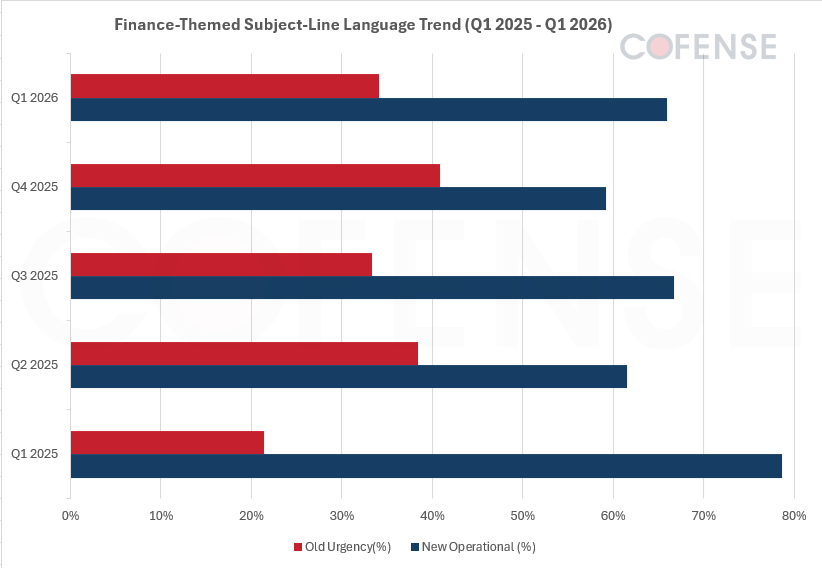
Figure 1: Finance-themed subject-line language trend based on urgency or operational vocabulary from Q1 2025 to Q1 2026.
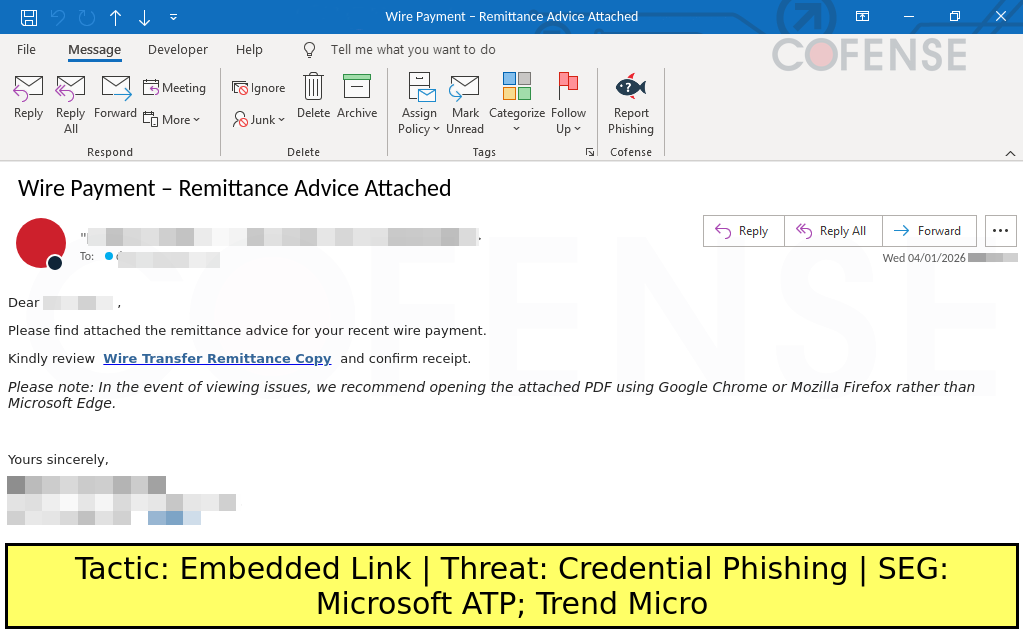
Figure 2: Example of a finance-themed credential phishing email leveraging an embedded malicious URL to facilitate credential phishing.
The strategy prioritizes inbox plausibility over emotional pressure. A routine subject line may remain credible longer because it does not trigger immediate skepticism, including among employees who have learned classic phishing indicators but have not been trained to question administrative normality.
Why Single-Message Detection Falls Short
Operationally styled finance lures are designed to look different enough to avoid obvious repetition. Attackers may rotate subject lines, senders, reference numbers, attachment names, and URLs while preserving the same underlying narrative and objective. A message-by-message approach can therefore treat one campaign as dozens of unrelated incidents.
Cofense Vision uses AI-driven clustering and structural pattern matching to connect related variants before every IOC is known. This campaign-level view helps analysts investigate once, confirm the threat with full context, and extend remediation across related emails—including variants that arrived earlier and were not initially recognized.
Dominant Finance Lure Categories
Modern finance-themed campaigns generally cluster around three business narratives: new opportunities, contracts already in progress, and payments. Each aligns with a familiar workflow and can support credential phishing or malware delivery.
1. New Business Lures
Fake commercial opportunities remain plausible because finance and procurement teams regularly receive unsolicited external communication. Messages may present requests for proposal, tenders, supplier-registration opportunities, procurement notices, or bidding invitations. These narratives naturally justify an unfamiliar sender domain, an attachment, or a link to an external portal.
Threat actors exploit that expectation with malicious PDFs, credential-harvesting pages, or counterfeit procurement sites. Fake procurement opportunities are often more persuasive than generic product offers because they create immediate business relevance without requiring visible pressure.
2. Contracts in Progress
The second category implies continuity. Rather than asking the victim to start a process, the message suggests that an existing contract, signature, or negotiation only needs to be completed. Subject lines reference draft contracts, e-signature requests, payment terms, or shared agreement documents.
This differs from classic business email compromise, which often relies on authority and direct financial instruction. Contract-progress phishing uses procedural realism. The recipient may assume that another colleague or department owns the missing context and open the attachment before asking questions.
3. Payments
Payment narratives remain persistent because payment work already carries built-in legitimacy. Threat actors may imitate remittance advice, transfer confirmations, revised bank details, invoice corrections, or settlement documentation. No extra urgency is necessary: the workflow itself signals that attention is required.
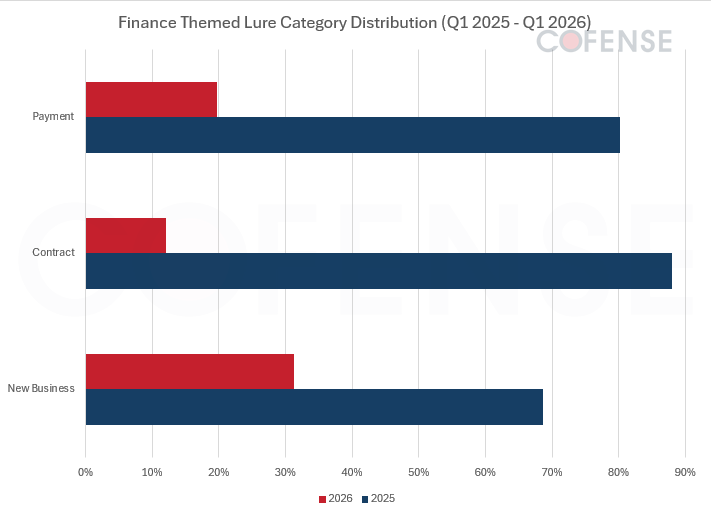
Figure 3: Finance-themed lure category distribution from Q1 2025 to Q1 2026 showing shifts across New Business, Contracts, and Payments.
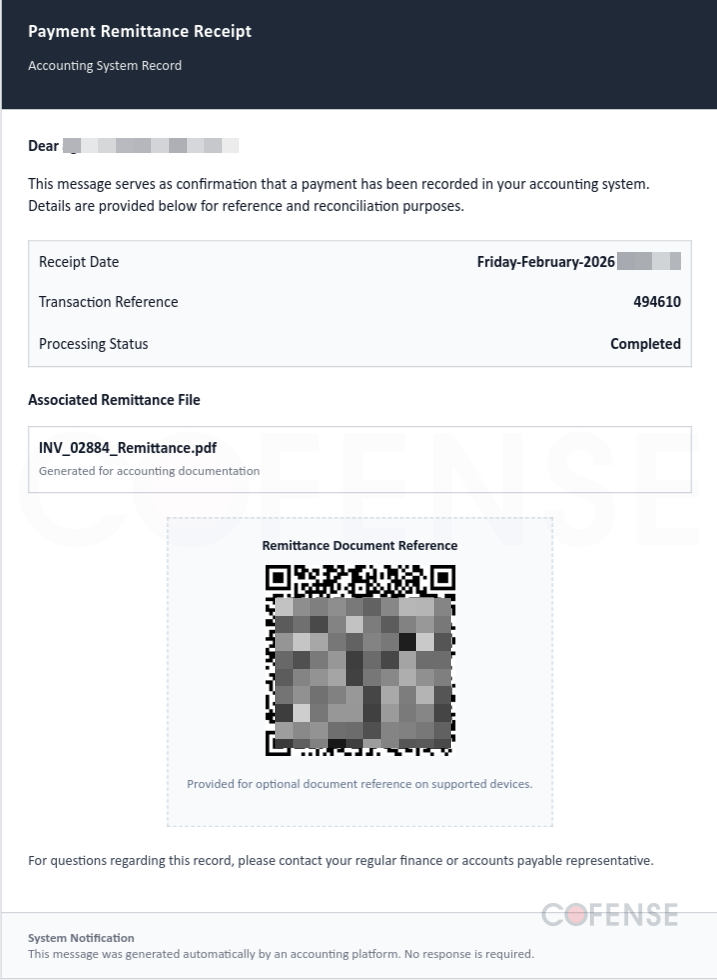
Figure 4: Finance themed PDF attachment that links to a credential phishing site via a QR code.
Conclusion
Email remains an effective initial-access vector for finance-related targets because financial operations depend on high-volume message processing, routine attachment handling, and external communication with suppliers, vendors, legal parties, and counterparties.
Finance-themed phishing has evolved alongside user awareness. Earlier campaigns demanded attention through visible urgency. Current campaigns use contextual details, reply-chain formatting, invoice references, settlement language, and payment workflows to mimic normal business communication. The strongest malicious email no longer looks urgent. It looks routine.
Defensive programs must therefore address malicious normality, not only suspicious words. Training focused exclusively on threats, pressure, and obvious mistakes is insufficient when ordinary finance language becomes the delivery mechanism.
Turn Active Threats Into Relevant Training
Real-world campaign insight should also strengthen the human layer. Instead of relying on generic awareness content focused only on words such as “urgent,” organizations can turn active finance lures into targeted simulations and reinforce the behaviors employees need for current attacks: validating the business context, confirming the sender through a trusted channel, and reporting messages that feel routine but do not align with the workflow.
Cofense unifies phishing-specific AI, human-validated intelligence, employee reporting, campaign-level remediation, and threat-informed training in one post-perimeter defense. That connected loop helps organizations detect what gets through, respond at campaign scale, and build resilience from the attacks targeting their teams now.