By: Jacob Malimban, Intelligence Team
In the first half of 2026, Cofense Intelligence observed a 239% rise in phishing campaigns that weaponize brand names to deliver malware onto corporate devices as compared to the first half of 2025. Adobe, the Social Security Administration, Docusign, the IRS, and Zoom are among the most abused. The names are familiar by design: employees who expect a routine document from a recognized sender appear more likely to click, and the borrowed credibility of those brands helps the emails slip past automated security filters. There are two primary ways that brands can be spoofed to deliver malware and abused legitimate remote access tools (RATs).
The first is the initial phishing email. The brand spoofed in the email is what sets the expectation for the context of the campaign. For example, threat actors have used lures such as a refund sent by the IRS (Figure 5) and a benefits-themed document sent by the Social Security Administration (Figure 3). When a victim expects a file but does not realize the sender is malicious, they are likely to click on a phishing link.
The second way a brand can be abused is through the filename. To trick victims, malware may be named “Social_Security_Administration_v02.4_EN_US.msi” (Figure 3) or “setup_Zoom.msi” (Figure 6), depending on the brand used in the phishing email. These malware files are often hosted on cloud services like Google or Amazon, which can bypass the organization’s security controls.
What makes this threat category particularly difficult to manage is that the tools being delivered are not traditional malware. ConnectWise RAT, Datto RMM, SimpleHelp, and similar products are the same software that many IT departments use for legitimate remote support. Threat actors favor them precisely because standard security systems are built to trust them.
Key Points
- In the first half of this year, 18% of all malware delivery campaigns impersonated new brands not seen before.
- Adobe is the most abused brand when delivering malware in the first half of 2026.
- The malware downloaded usually has a filename matching the phishing email branding, like “Adobe software update.msi”.
- Threat actors often abuse legitimate cloud services like Google or Amazon to distribute malware and bypass security controls.
- 94% of campaigns delivering malware abuse legitimate remote access tools (RATs).
Brand Campaign Volume
- Malware delivering campaigns increased 239% in the first half of 2026 compared to the first half of 2025.
- The top five brands account for around 24% of all malware delivery campaign volume in the first half of this year.
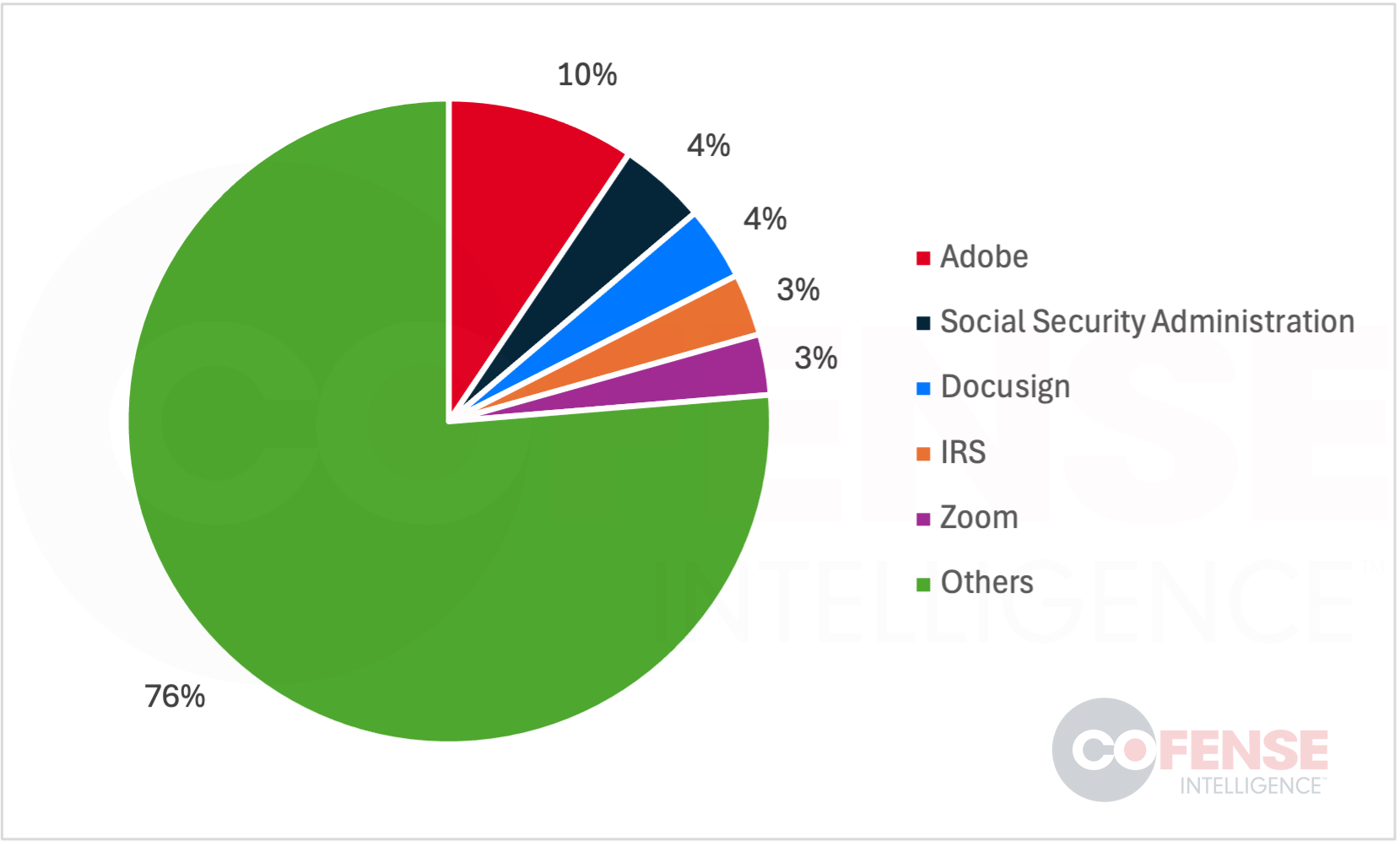
Figure 1: The relative proportion of brands spoofed in the first half of 2026.
In the first half of 2026, Cofense Intelligence identified brands like Adobe, Social Security Administration, Docusign, IRS, and Zoom being abused in malware delivery campaigns. Docusign and Adobe are part of normal organizational operations. These brands follow the trends first identified in 2021. Social Security Administration-spoofing and IRS-spoofing after April mark the trend of government themed phishing outside of the IRS tax season. Zoom has typically been abused to host documents with links to credential phishing pages—and rarely links to malware pages.
Adobe Spoofing Campaigns Delivering Malware
- Adobe-spoofing phishing campaigns rank #1 by volume in the first half of 2026.
- Adobe-spoofing phishing emails delivering malware experienced an 18-fold increase when compared to the first half of 2025.
- Adobe-spoofing campaigns typically deliver ConnectWise RAT (44%), Datto RMM (16%), and GoTo RAT (7%).
- These software are technically legitimate remote access tools (RATs) but can be abused by threat actors to gain unauthorized administrative access.
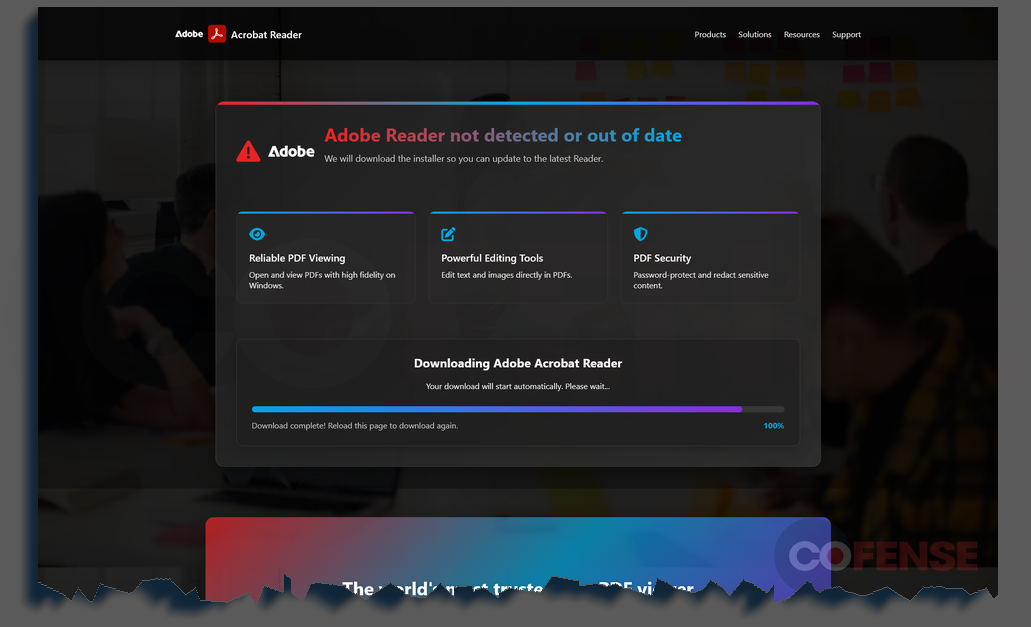
Figure 2: Adobe-spoofing website claiming a software update is necessary (ATR 415874).
In credential phishing, Adobe has been used to host documents with links to malicious websites. Typically, PDFs with shortened links or QR codes obfuscate the credential phishing pages. In Adobe-spoofing campaigns delivering malware, the email usually claims a document is available to view.
After clicking on the phishing link and attempting to download the document, a website opens. The malicious website typically claims that Adobe Reader is out of date, and an update is necessary to see the PDF. Installing the file will deliver a legitimate RAT controlled by the threat actor. In these Adobe software update phishing campaigns, threat actors like to abuse tools such as ConnectWise’s ScreenConnect (ConnectWise RAT) and Datto RMM to take over the victim machine. For example, Figure 2 shows one website that claims Adobe Reader is out of date and downloads malware. Indicators of compromise (IOCs) for Figure 2 are listed in Active Threat Report (ATR) 415874. ATRs contain the context for each threat actor campaign, allowing current and similar campaigns to be blocked.
Social Security Administration Spoofing Campaigns Delivering Malware
- Social Security Administration-spoofing is the second highest by campaign volume.
- Campaign volume in the first half of 2025 is roughly equivalent to volume in the first half of 2026.
- SSA-spoofing typically delivers ConnectWise RAT (55%), SimpleHelp (12%), and Faronics Deploy (9%).
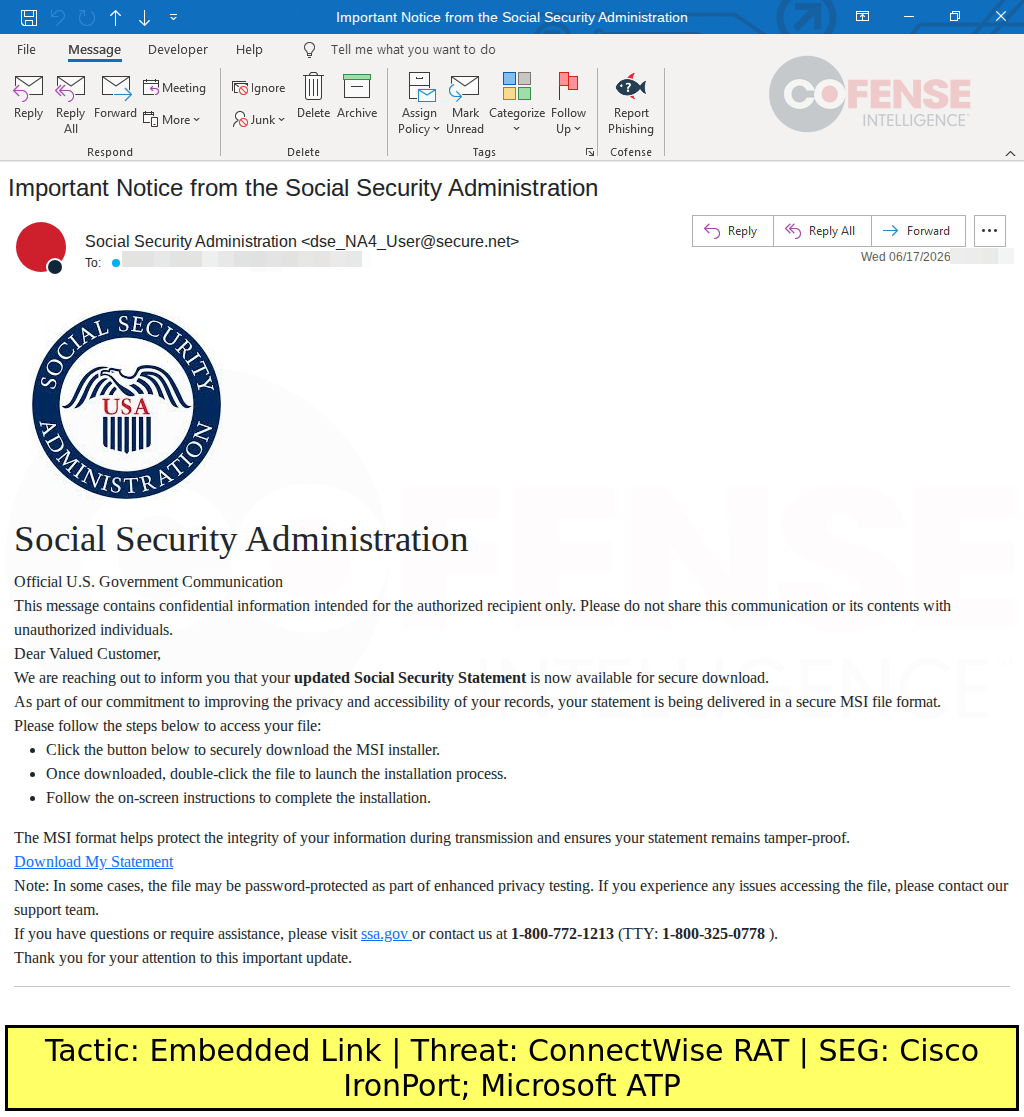
Figure 3: Social Security Administration-spoofing email that bypasses email security technology to deliver ConnectWise RAT (ATR 417484).
In the United States, the Social Security Administration (SSA) becomes an important consideration near retirement age (at least age 62). For eligible members of the workforce, this pension information can dictate the lifestyle one lives after employment ends. Previous campaign iterations in Q4 2024 prioritized urgency and consequences when phishing. Current SSA-spoofing emails usually claim to provide information rather than demand it. Figure 3 shows an SSA download statement phishing email, one of the scams the SSA Office of the Inspector General warns about.
If the phishing link is clicked, an SSA-spoofing website typically opens, and a file download starts. The file appears similar to those in the Docusign and Adobe sections. Some files act like benefit letters or document notifications. Others require a download file to be run because “Adobe Reader is out of date”. As usual, running the file will install a threat actor-controlled legitimate RAT. The RATs most commonly installed are ConnectWise RAT and SimpleHelp. The SSA-impersonation campaign delivering ConnectWise RAT has been going on since at least 2024.
Docusign Spoofing Campaigns Delivering Malware
- Docusign-spoofing emails increased about 250% when comparing the first half of 2026 to the first half of 2025.
- Docusign-spoofing campaigns typically deliver ConnectWise RAT (34%), GoTo RAT (11%), Itarian RAT (5%), or some combination of the three.
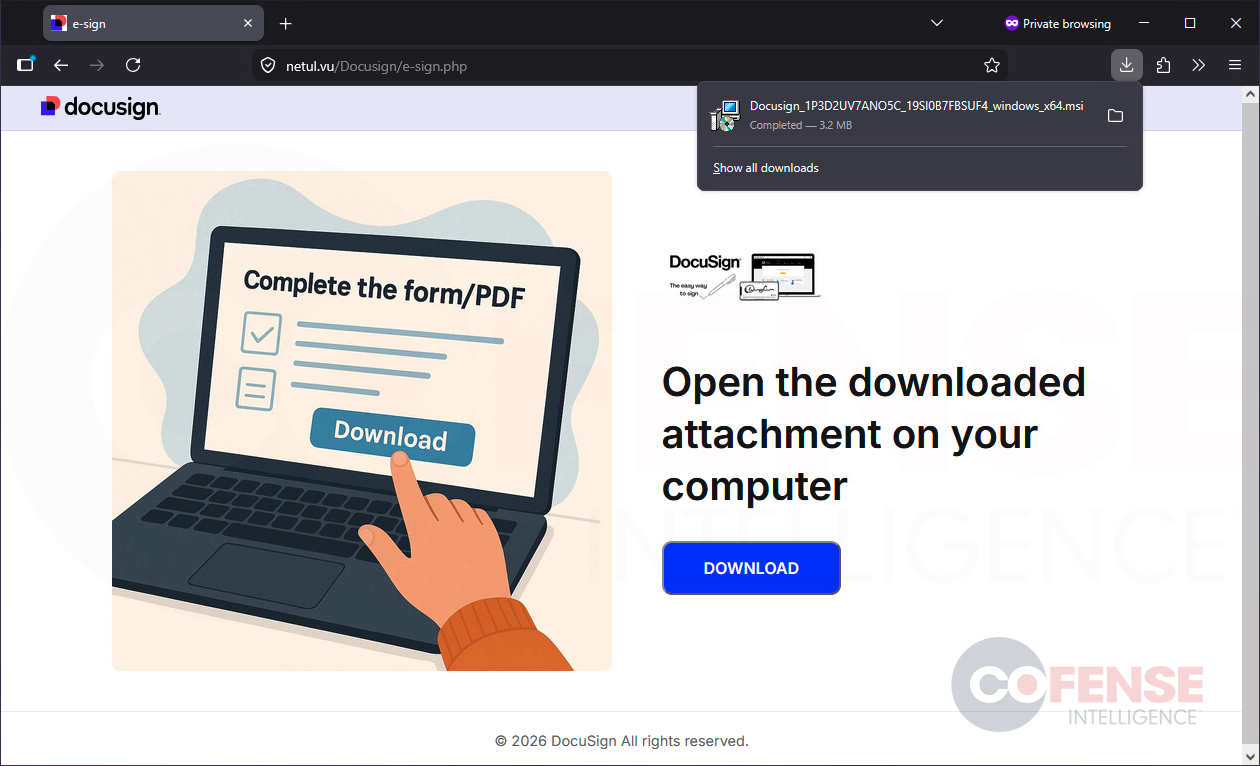
Figure 4: Docusign-spoofing file is a SuperOps RMM instance abused by the threat actor (ATR 415883).
Docusign is typically used by threat actors to host documents with links to redirect to malicious websites, usually Microsoft-spoofing credential phishing pages. This is because using trusted websites help bypass email security technologies, and abusing legitimate business tools helps malicious content mimic benign content. Docusign-branded emails are also useful for getting recipients to download fake documents. Downloading the fake document will deliver malware instead of the expected file.
Threat actors will typically use the Docusign style for the email, the malware download website, and the filename. As seen in Figure 4, a malicious file is named like a Docusign attachment. Threat actors like to deliver legitimate RATs that they control, like ConnectWise RAT and GoTo RAT.
IRS Spoofing Campaigns Delivering Malware
- IRS-spoofing email volume experienced a 10-fold increase when comparing the first half of 2026 to the first half of 2025.
- IRS-spoofing campaigns typically deliver ConnectWise RAT (50%), Tiflux RAT (13%), Splashtop (13%) or some combination of the three.
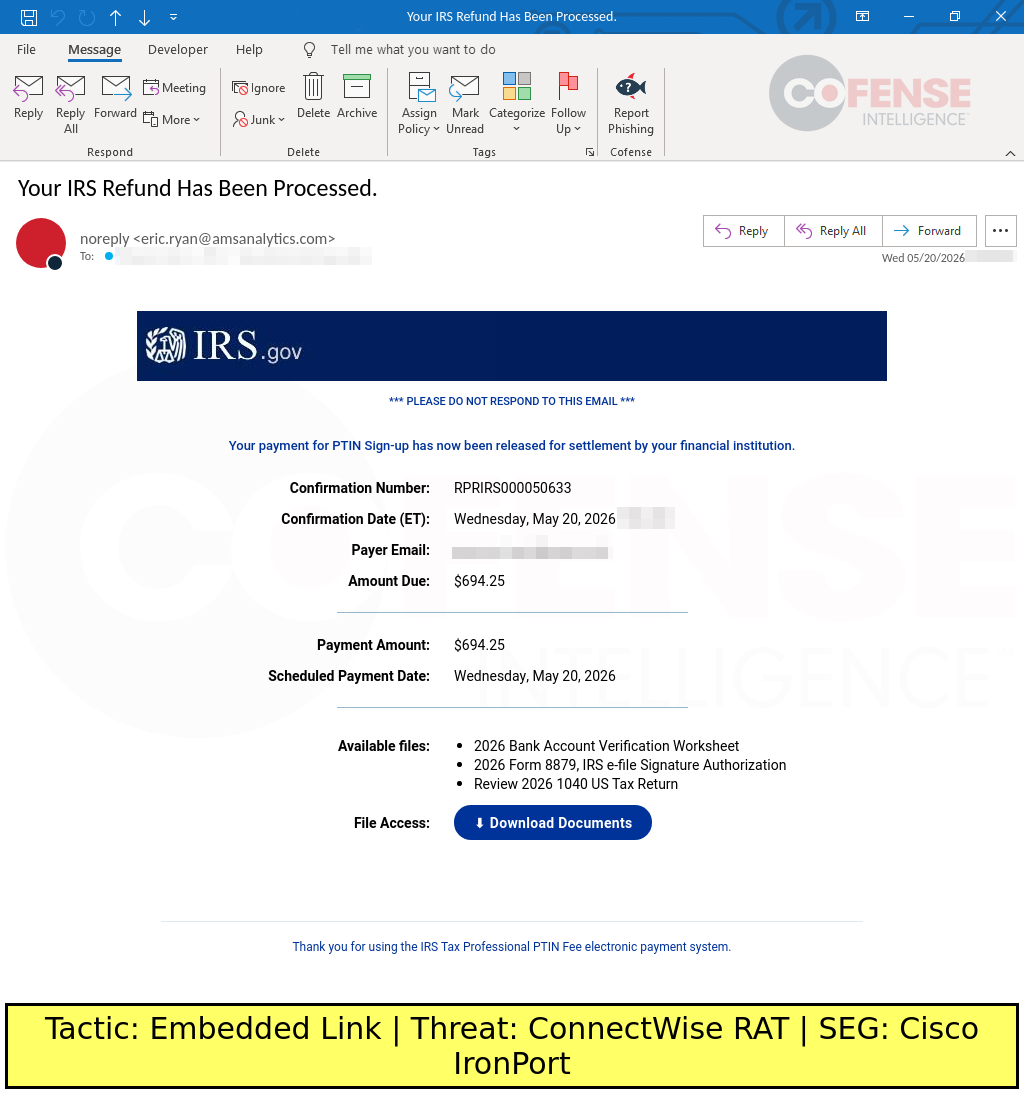
Figure 5: IRS-spoofing, tax refund-themed phishing campaign delivering ConnectWise RAT (ATR 415954).
In the first half of 2025, IRS-spoofing campaigns delivering malware were most prevalent before the USA tax filing date on April 15. Now in the first half of 2026, threat actors continue to use the IRS brand in phishing emails past the tax filing deadline but with many themed about late filing deadlines. Well-developed phishing lures used after April 15 include a refund that has been processed or a tax filing extension being made available. As threat actors use current topics like Elon Musk and DOGE offering an IRS tax refund, IRS-spoofing campaigns are expected to increase.
As with the general rise in threat-actor abused legitimate RATs, IRS-spoofing campaigns deliver similar malware in most cases. ConnectWise RAT is once again the most popular RAT to be abused in IRS-spoofing campaigns. There is also a multi-stage campaign where Tiflux RAT is first installed, then Tiflux RAT installs Splashtop and an UltraVNC utility. In earlier group-delivered malware campaigns, the malware was primarily purpose-built for threat actors and entirely malicious. In the case of Tiflux RAT and Splashtop, both are developed by legitimate organizations for IT operations. Unfortunately, the instances of Tiflux RAT and Splashtop delivered in these campaigns are controlled by threat actors.
Zoom Spoofing Campaigns Delivering Malware
- Zoom-spoofing emails delivering malware increased over 100% when comparing the first half of 2026 to the first half of 2025.
- Zoom-spoofing campaigns typically deliver ConnectWise RAT (29%), TrustConnect (14%), and Atera (7%).
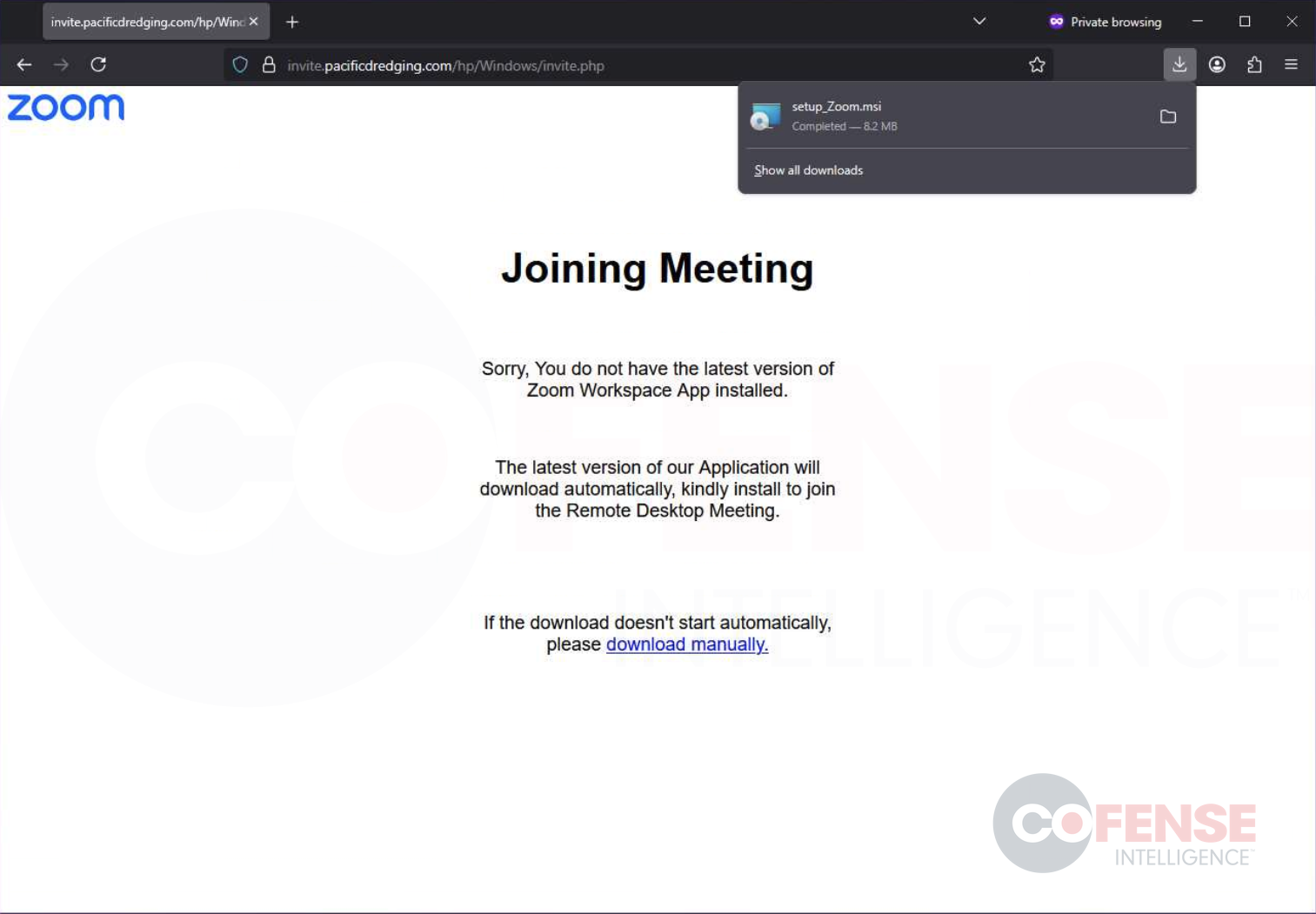
Figure 6: A fake Zoom website that downloads an abused RAT (ATR 416603).
Legitimate Zoom links can prompt users to download the Zoom app to access the meeting. Threat actors frequently spoof Zoom and hijack this expected behavior to trick users into downloading malware instead.
Zoom-spoofing phishing emails match the format of legitimate Zoom meeting emails, but the links will redirect to a malware download page instead of the legitimate Zoom site. The most prominent malware delivered is ConnectWise RAT again. TrustConnect and Atera are similar RATs abused by threat actors and delivered in Zoom-spoofing campaigns. Figure 6 shows a malicious Atera instance being downloaded from a threat actor’s website.
Problems Caused by Legitimate Remote Access Tool Abuse
- As legitimate RATs are developed for enterprise use, abuse of these tools by threat actors may hide in plain sight.
- ConnectWise RAT is currently the most abused legitimate RAT, instead of NetSupport Manager RAT.
When used for their intended purpose, legitimate remote access tools can reduce costs and improve efficiency. With legitimate RATs, IT professionals can easily maintain and monitor various devices across the organization without needing physical access to it. This elevated privilege becomes problematic when threat actors gain access to it.
Legitimate RATs are just as capable of purpose-built malware in the hands of a threat actor. With PowerShell commands, additional malware payloads can be installed after the initial RAT infection. Threat actors have used ConnectWise RAT to deliver ransomware before.
Organizations can find it hard to identify and contain legitimate RATs used by threat actors. Threat actors may even use the same RATs the organization uses, making context, continuous monitoring, and mitigative controls especially important. If the organization successfully contains one type of RAT, threat actors can easily use a different legitimate RAT for infections. In each of the brands spoofed in this report, threat actors already abuse various legitimate RATs.
Conclusions
This report shows five prominent brands spoofed by threat actors. Some key insights include malicious content nearly indistinguishable from legitimate brands, and the increasing abuse of legitimate remote administrative tools. These tactics by the threat actors can make it harder for both users and security analysts to determine if something is legitimate or not. Especially noteworthy are IRS-spoofing and Social Security Administration-spoofing phishing emails. IRS-spoofing emails will likely continue to increase even outside of tax filing season. Social Security Administration-spoofing emails already are not limited by a specific season.
Mitigations
- Establish and enforce a software allowlist for remote access tools. Any remote access tool not on that list, including ConnectWise, SimpleHelp, Atera, and GoTo RAT, should be blocked from installing on corporate devices. Organizations that do not have an allowlist should at minimum block the digital certificates associated with remote access tools they do not use.
- Update employee security awareness training to reflect current lure themes, specifically Adobe document requests, SSA benefit notices, IRS refund emails, and Zoom meeting invitations. Employees who have been trained on real, current threats are more likely to pause before clicking. Simulation exercises should use these exact scenarios, not outdated generic examples.
Blocking remote access tools and updating training are essential, but threat actors will keep finding new brands, filenames, and legitimate tools to abuse. Organizations need a way to respond quickly when a campaign reaches the inbox or an endpoint. To learn how Cofense Remediation can help your security team identify and remove these threats faster, visit https://cofense.com/pdr-platform.